
Puke On The Rug… Again?! Understanding Chronic Vomiting in Dogs and Cats
You’ve cleaned up the same spot on the kitchen floor three times this week. Your cat is an otherwise healthy, happy ten-year-old who has been vomiting once or twice a week for months, and somewhere along the way you started treating it as just… her thing. Or maybe your dog throws up most mornings before breakfast, and the previous vet mentioned something about an empty stomach. It all seems explainable, until it isn’t.
Chronic vomiting (especially when it shows up alongside weight loss, appetite changes, or intermittent diarrhea) almost never resolves with a single intervention. Getting to a real answer takes a stepwise approach: bloodwork and imaging to rule out the most serious causes, sometimes a structured dietary trial, and occasionally endoscopy or biopsy when the picture remains unclear. At Midtown Veterinary Hospital, our diagnostics services are equipped to work through complex GI cases with AAHA-accredited medical standards. If your pet has been vomiting more than you can easily explain, reach out to us so we can start putting the pieces together.
When Vomiting in Pets Becomes Concerning
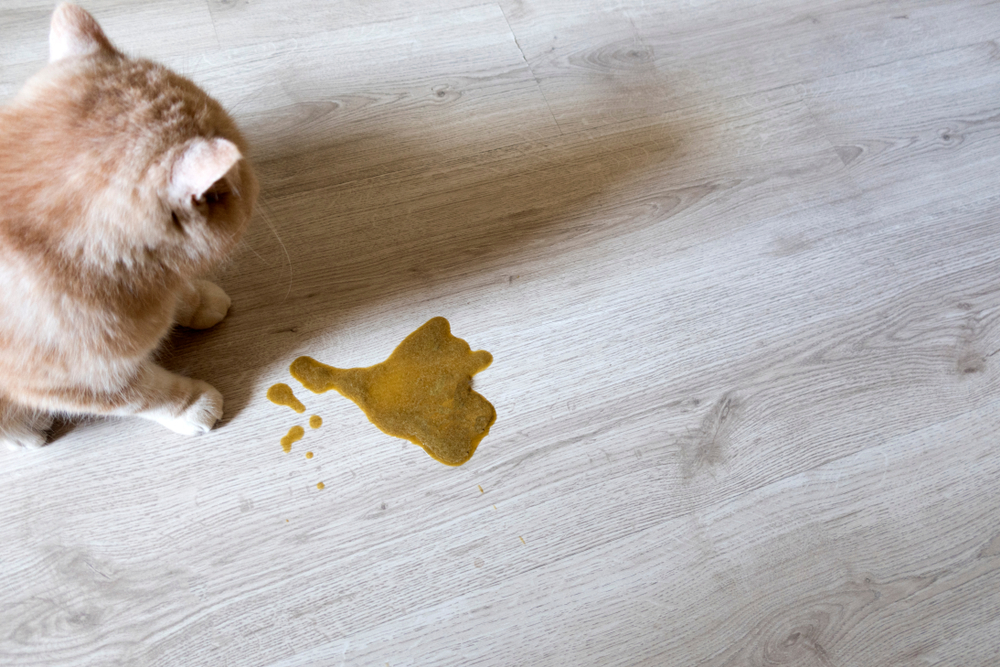
Your observations about your pet’s vomiting episodes greatly help our diagnostics process. Pay attention to what the vomit looks like, how often it happens, and if any other symptoms are occurring. Photos can help.
What the Appearance and Frequency of Vomiting Can Tell You
The appearance of vomit gives us useful clinical information before any testing begins.
| Vomit Type | What It May Suggest |
| Yellow or green bile | Empty stomach; sometimes bilious vomiting syndrome in dogs |
| Undigested food, soon after eating | Eating too fast, blockages, or possibly regurgitation rather than true vomiting |
| Partially digested food, hours after eating | Delayed gastric emptying, motility issues, or obstruction |
| Dark or coffee-ground material | Digested blood from upper GI bleeding |
| Bright red blood | Active bleeding in the upper GI tract |
| Foamy white liquid | Stomach acid on an empty stomach |
A critical distinction worth raising here: true vomiting involves abdominal effort, with your pet hunching and contracting their stomach to bring something up. Regurgitation looks more passive, with food simply coming back up shortly after eating. Conditions like megaesophagus cause regurgitation rather than vomiting and require a different diagnostic approach.
When a Vomiting Pet Needs a Veterinary Evaluation
Vomiting that crosses into “chronic” territory has a few distinguishing features:
- Occurs more than once or twice a week
- Lasts longer than three weeks
- Keeps recurring after short periods of improvement
Other signs that move the situation from watchful waiting to scheduling an appointment:
- Increasing hairballs in cats, or hairballs more than once a month
- Unexplained weight loss
- Increased thirst or urination
- Low energy or unusual lethargy
- Concurrent diarrhea that comes and goes alongside vomiting
Older pets warrant particular attention. The organ diseases that become more common with age (kidney disease, liver disease, hyperthyroidism in cats) often first present as chronic vomiting, and recognizing senior pet health changes early is part of how we catch these.
When Vomiting in Pets Is an Emergency
Some signs warrant an immediate call rather than a scheduled appointment:
- Vomiting blood (bright red or coffee-ground appearance)
- Abdominal distension or pain, particularly with unproductive retching in a large or deep-chested dog (a sign of bloat)
- Unproductive retching repeatedly with nothing coming up
- Inability to keep water down for more than a few hours
- Severe lethargy, weakness, or collapse
- Vomiting in very young or very old pets alongside other symptoms
For these situations during open hours, our emergency and urgent care services handle same-day evaluation. Outside open hours, we also have 24/7 telehealth with VetTriage to help you decide whether you can wait until morning or need to head to a 24-hour emergency hospital.
What Causes Chronic Vomiting in Dogs and Cats
Chronic vomiting is rarely a single-system problem, and an accurate diagnosis is what makes treatment effective. The cause categories below cover the territory we work through, but there are other causes not listed too. Getting to the bottom of a chronic vomiting problem can be a frustrating process, as it often takes multiple visits and testing to find the true cause. Stick with it- we’re here to help.
Food, Diet, and Dietary Indiscretion
Food Choice
Food is one of the most common contributors to chronic vomiting and one of the last things owners think to question. Choosing the right food for your pet’s age, size, and health history matters, and even a food your pet has eaten for years can become a problem if a sensitivity develops.
Two terms worth distinguishing:
- Food allergy involves the immune system reacting to a specific protein, usually causing both GI symptoms and skin issues
- Food intolerance is a non-immune reaction to an ingredient, producing GI symptoms without the skin component
Dietary inconsistency (frequent food changes, multiple treats from different brands, table food) can perpetuate symptoms by making it impossible to identify which ingredient is the trigger.
Dietary Indiscretion
Raiding trash cans, picking up snacks off the street, eating poop left by local wildlife on walks, and swallowing small objects are another major source of chronic vomiting. GI obstructions from swallowed objects do not always present dramatically. A partial obstruction (where something is lodged but not completely blocking passage) can cause intermittent vomiting over days or weeks before becoming a full obstruction.
Common offenders are small enough to slow GI passage but not enough to fully block it: pieces of fabric, parts of toys, hair ties, string. If your pet vomits, seems fine, then repeats the pattern a few days later, a foreign body should be on the list.
Our surgery team handles foreign body removal when imaging confirms an obstruction.
Systemic and Organ Disease
Vomiting is not always a stomach problem. Several systemic conditions trigger nausea and vomiting as secondary effects, and treating GI symptoms without identifying the underlying cause produces only temporary relief.
- Chronic kidney disease: causes nausea as waste products build up in the blood, often presenting alongside increased thirst and urination
- Liver disease and gall bladder disease: affects digestion and can cause both vomiting and reduced appetite, sometimes with jaundice
- Hyperthyroidism: one of the most common diseases in older cats, frequently presenting with vomiting alongside weight loss and a strong appetite
- Pancreatitis: causes intermittent vomiting, abdominal discomfort, and reduced appetite that can wax and wane for weeks
Primary GI Tract Disorders
Once systemic causes have been ruled out, the focus shifts to conditions originating within the GI tract itself. Accurate diagnosis matters because treatments differ significantly between these conditions.
- Inflammatory bowel disease: chronic inflammation of the intestinal lining that disrupts digestion and absorption. Common cause of chronic vomiting in cats and also affects dogs
- Lymphoma: can be difficult to distinguish from IBD without biopsy, particularly in cats
- Gastric ulcers: can develop from long-term anti-inflammatory medications, underlying disease, or chronic stress
- Bilious vomiting syndrome: yellow vomiting on an empty stomach, typically before the first meal of the day in dogs. Often resolves with a late-night or early-morning snack
- Pyloric stenosis: a narrowing at the stomach’s exit point, causing food to back up and vomiting shortly after meals
- Gastric cancer: less common in dogs but warrants evaluation when other causes have been ruled out and symptoms persist
Distinguishing between these conditions depends on combining diagnostic findings with your observations at home.
Eating Habits and Stress: Two Overlooked Causes
Two contributors to chronic vomiting often look identical to medically caused symptoms on the surface, and both are commonly missed.
Fast Eating and the Scarf-and-Barf Pattern
When a pet eats so fast that food comes back up looking nearly undigested shortly after the meal, the cause is mechanical rather than medical. The pattern is common in multi-pet households where competition for food motivates rapid eating, and in pets with a history of food insecurity.
The fix is structural:
- Slow feeders like interactive feeders force pets to work for each bite
- Feeding pets separately removes the competition driver
- Smaller, more frequent meals reduce the volume that ends up in the stomach at any one time
Stress and Anxiety as Drivers of GI Vomiting
Chronic stress and anxiety affect GI function more than most families realize, particularly in cats. The vomiting that comes with stress looks identical to medically caused vomiting, which is part of why it gets missed.
Stress and anxiety often shows up alongside GI symptoms when the source is ongoing rather than acute. Feline stress is particularly worth flagging because cats are highly sensitive to household changes (new pets, altered routines, competition for resources, noise, construction). Stress vomiting often presents alongside other behavioral signs: hiding more than usual, overgrooming, withdrawing from family, or shifts in sleep patterns.
How the Diagnostic Workup Works
The workup starts with a thorough history and physical exam, then proceeds to baseline diagnostics. The typical sequence:
- Bloodwork: complete blood count and chemistry panel to evaluate organ function, hydration, electrolytes, and inflammation
- Urinalysis: to assess kidney function and rule out urinary causes
- Fecal testing: to identify intestinal parasites
- X-rays: find blockages, organ enlargement or tumors, and can be combined with barium to measure intestinal motility or identify more subtle abnormalities
If the baseline diagnostics don’t point to an answer, or show signs of a disease best diagnosed using ultrasound, we may recommend an abdominal ultrasound to gather detailed real-time views of the stomach, intestines, liver, pancreas, and kidneys, which can identify intestinal and stomach wall thickening, masses, fluid, and foreign material that radiographs may miss.
Established wellness baselines from prior visits make today’s results more meaningful. A creatinine value at the high end of normal isn’t necessarily concerning on its own, but if it has been climbing year over year, that’s a meaningful trend. Our wellness and prevention services are also a good time to bring up any GI concerns before they become a bigger problem and to start establishing what your pet’s “normal” bloodwork looks like.
Elimination Diet Trials for Pets With Chronic Vomiting
When baseline diagnostics do not identify a clear cause, a structured diet trial is the next step. Two approaches:
- Novel protein diets use a protein source your pet has never been exposed to (kangaroo, rabbit, venison)
- Hydrolyzed protein diets break proteins into pieces too small for the immune system to recognize
Strict compliance for 8 to 12 weeks is essential. That means:
- No treats, table food, or food sharing with other pets
- No flavored medications or supplements
- No flavored toothpaste during the trial
- No table scraps from anyone in the household
Over-the-counter “limited ingredient” foods are not appropriate for diagnostic trials due to manufacturing cross-contamination. Therapeutic prescription diets are formulated for elimination trials and are the only reliable option for accurate diagnosis.
Endoscopy and Biopsy for Chronic Vomiting in Pets
When initial testing and a diet trial have not identified the cause, advanced diagnostics give us the next layer of information.
Endoscopy as a Minimally Invasive Diagnostic Option
Endoscopy uses a flexible camera inserted under anesthesia to directly visualize the upper GI tract and collect tissue samples from the esophagus, stomach, and upper small intestine. The procedure is minimally invasive, recovery is typically rapid, and it is appropriate when initial testing has not identified the cause or when the GI lining needs direct assessment. We coordinate endoscopic procedures through trusted referral partners when this is the right next step for your pet.
Exploratory Surgery and GI Biopsy
Exploratory surgery allows direct examination of abdominal organs and collection of full-thickness biopsy samples from multiple locations along the GI tract simultaneously. Full-thickness tissue reveals conditions that surface endoscopic samples may miss, including transmural inflammation patterns and certain forms of lymphoma.
Surgery is recommended when:
- Imaging identifies abnormalities requiring hands-on evaluation
- Full-thickness tissue is needed for accurate diagnosis
- A blockage or mass requires direct intervention
Our surgery services handle GI biopsy and exploratory procedures when these are the most appropriate path to a diagnosis and treatment in the same procedure.
What Biopsy Results Reveal
Histopathology distinguishes between IBD, intestinal lymphoma, other GI cancers, infections, and different inflammatory patterns. This distinction matters because treatments differ entirely. IBD responds to immunosuppressive therapy and dietary management. Lymphoma may respond to chemotherapy, with some forms allowing cats to live for years with quality lives. Infections respond to targeted antimicrobials. Accurate tissue diagnosis enables targeted therapy rather than empirical treatment that may delay the right approach.
Treatment Approaches Based on What the Workup Finds
Managing Food-Responsive Vomiting
Management centers on consistently maintaining the diet that resolved symptoms during the elimination trial. The practical pieces:
- Strict household rules about treats and table food
- Planning ahead for holidays, travel, and visitors who may not know the rules
- Watching for ingredient changes when manufacturers reformulate
IBD Management
IBD typically requires a combination of anti-inflammatory or immunosuppressive medications and dietary adjustments to support gut function. Individual responses vary, and treatment is refined over time based on each patient’s progress. Initial response may be partial, with medication adjustments common during the first few months.
Treating Systemic Causes of Vomiting
When systemic disease is driving the vomiting, the therapeutic focus shifts to the underlying organ condition. Resolving or stabilizing the core condition typically produces significant improvement in GI symptoms. We may recommend anti-nausea medications to help your pet feel better while getting the underlying disease under control or as a long-term part of their treatment.
Between-appointment questions are always welcome. Reach out to our team if something changes or if the diary is showing a pattern you want help interpreting.
Frequently Asked Questions About Chronic Vomiting in Dogs and Cats
My pet vomits once a week. Is that really something to investigate?
Yes. Weekly vomiting over several weeks is chronic by most definitions. It usually indicates an underlying process worth identifying, and one that’s often easier to manage when caught before it progresses.
Can I just change the food without a vet visit?
Switching foods without guidance sometimes helps dietary cases, but it can also complicate a future food trial and delay the diagnosis of a non-dietary problem. If a switch doesn’t help within two to three weeks, come in.
My older cat has vomited weekly for years. Is it really a problem?
Chronic vomiting in senior cats is often attributed to hairballs or “sensitive stomachs” when the actual cause is hyperthyroidism, kidney disease, or GI lymphoma. These are treatable conditions. Normal aging does not cause chronic vomiting.
What if all the tests come back normal?
A clean blood panel and normal imaging narrow the possibilities significantly and often point toward primary GI disease requiring a food trial, endoscopy, or biopsy. A “normal” workup is useful information, not a dead end.
Can I use human anti-nausea medications at home?
No. Human anti-nausea medications including Pepto-Bismol and Dramamine are not safe for pets, and some are toxic to cats in particular. If your pet is actively nauseated, give us a call rather than reaching for the medicine cabinet.
Getting to a Real Answer for a Vomiting Pet
Chronic vomiting is exhausting to manage when you do not know the cause. The methodical approach (history, baseline diagnostics, dietary trial when appropriate, advanced diagnostics when needed) gets you to a real answer rather than indefinite symptom management. Midtown Veterinary Hospital’s AAHA-accredited team works through these cases with the diagnostic depth and care these cases deserve, and we are committed to staying with the process until your pet has a clear diagnosis and a treatment plan that works.
If your pet has been vomiting more than you can easily explain, reach out to schedule an appointment so we can get started.




Leave A Comment